Cupping
Negative pressure on the body surface to release muscle tension and support circulation
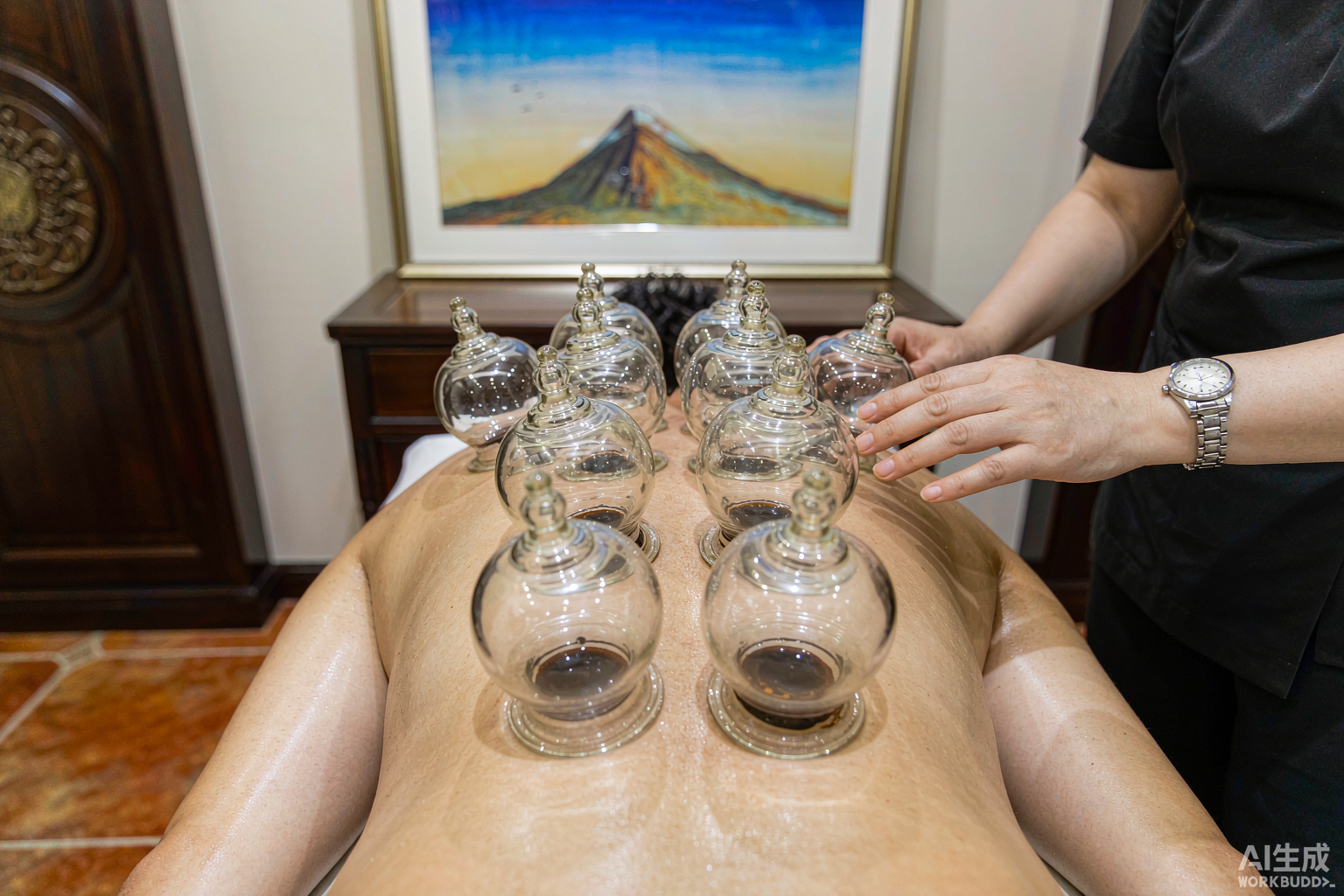
1. What cupping is
Cupping applies suction that draws skin and superficial tissue into the cup, producing local traction and congestion. Hospitals most often use glass cups with a flame technique, plus portable silicone squeeze cups.
It is a clinical procedure: cups are single-use or sterilised between patients, and broken skin, oedema or fever are contraindications.
2. What it is commonly used for
Cupping usually accompanies acupuncture or tuina. Common scenarios:
It is not a cure-all — internal and infectious diseases need conventional care, which the physician will state at first assessment.
- Tight, overworked neck, shoulder and back muscles
- Early-stage colds as supportive relief
- Post-training muscle recovery
- Pain protocols combined with acupuncture
3. Marks are not a “detox score”
A cupping mark is capillary congestion under suction. Depth of colour reflects suction strength, retention time and local circulation — not “toxins”.
Marks fade in 3–10 days without special care. Marks that persist beyond a week or blisters that become infected are signals to seek medical review — a simple test of whether the technique was properly applied.
4. Procedure and aftercare
A session runs 15–30 minutes: skin and constitution assessment → choice of technique (retained, mobile, flash) → application → observation and aftercare.
Afterwards: no cold showers or draughts for 4 hours; sensitive skin may blister — small ones absorb on their own, larger ones need sterile dressing.
5. Cost and language
At Grade 3A hospitals a single session commonly costs a few tens to just over a hundred RMB; mobile cupping costs slightly more for the extra chair time. Cupping can be bundled onto the same treatment sheet as acupuncture.
“The darker the mark, the better the result” is the most common misreading among international patients — good cupping aims at relaxed muscle, not colour.
Hôpitaux représentatifs
Guangdong Provincial Hospital of Chinese Medicine
Canton
Both acupuncture and tuina departments apply cupping; mobile and balance-cupping are signature techniques
Voir la fiche hôpitalLonghua Hospital
Shanghai
Veteran Shanghai TCM hospital where cupping is routinely combined with moxibustion and tuina
Voir la fiche hôpitalÀ lire aussi