Chinese herbal medicine
Pattern-based, individualised herbal formulas — one prescription per patient
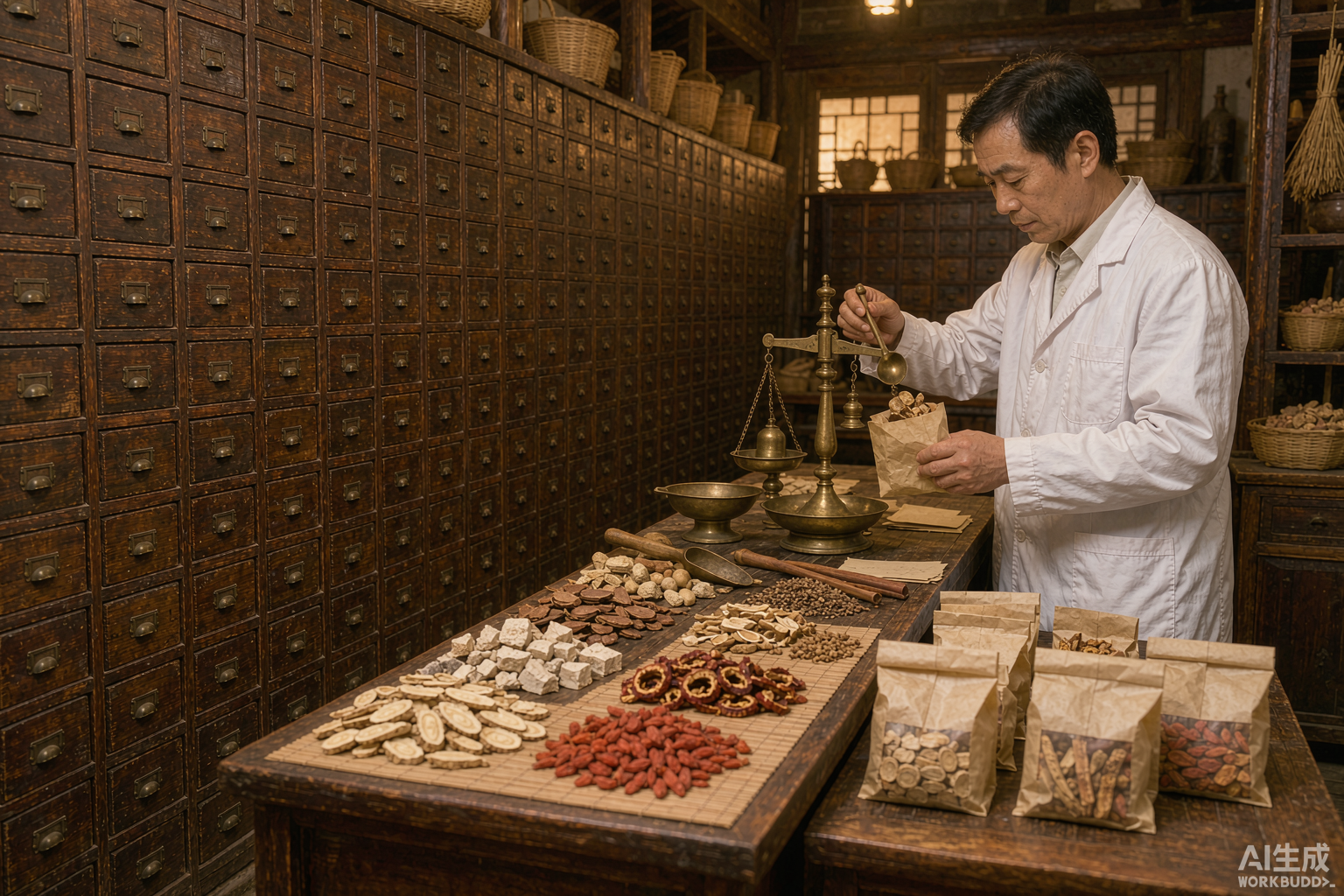
1. How a formula is built
The physician gathers information through inspection, listening-smelling, inquiry and pulse-taking, condenses it into a “pattern”, and composes the formula from that pattern. Two patients with the same disease may receive completely different prescriptions — that is pattern differentiation.
The pharmacy dispenses against the prescription with double-checking; raw herbs are boiled at home, or the hospital decocts them into sealed travel pouches.
2. Three common forms
Large hospitals also run paste clinics: in autumn and winter, a concentrated decoction is thickened with gel into a daily spoonful for long-term conditioning.
Form choice depends on condition and lifestyle; the physician will advise.
- Raw herbs: traditional decoction, fullest expression, needs boiling
- Granules: stir into hot water, convenient for travel
- Paste: concentrated and slow-release, for long courses
3. Safety: two things to know
“Natural” is not “harmless”. Two risks international patients should understand:
Licensed TCM hospitals monitor liver and kidney function and limit course length — precisely why you should buy herbs through a hospital rather than online shops.
- Aristolochic-acid herbs (e.g. aristolochia species) are clearly nephrotoxic; China banned them from formulas progressively after 2003 — confirm the pharmacy stocks pharmacopoeia-compliant herbs
- Herb-induced liver injury is documented worldwide; anyone on long courses should recheck liver function every 4–8 weeks
4. Taking herbs abroad: check the rules first
Before carrying raw herbs or finished medicines across a border, confirm your destination's customs rules. Universal red lines:
Granules and packaged medicines with English labels and receipts usually clear customs more easily than loose herbs; keep your prescription and purchase receipts.
- Any product containing protected-animal ingredients (rhino horn, tiger bone, pangolin) is banned under CITES
- Some countries restrict plant species or quantities (e.g. ephedra-containing formulas)
- Attach an English prescription note to loose herbs for inspection
5. Cost and language
A daily dose of raw herbs commonly costs 20–80 RMB; a month of chronic-condition herbs usually lands between several hundred and just over a thousand RMB. Decoction service adds a few RMB per dose — far below Western-market prices.
Follow-up adjustments depend on tongue, pulse and subjective feedback, so keep the same physician and use the international department's interpreter for consistency.
Hôpitaux représentatifs
Guangdong Provincial Hospital of Chinese Medicine
Canton
One of the largest hospital pharmacies in China; decoction-and-delivery is well suited to long-term international patients
Voir la fiche hôpitalLonghua Hospital
Shanghai
A long-running paste (gao fang) clinic; granule coverage spans the full common formulary
Voir la fiche hôpitalÀ lire aussi