Tai Chi & wellness
From tai chi forms to seaside wellness retreats: making recovery a plan
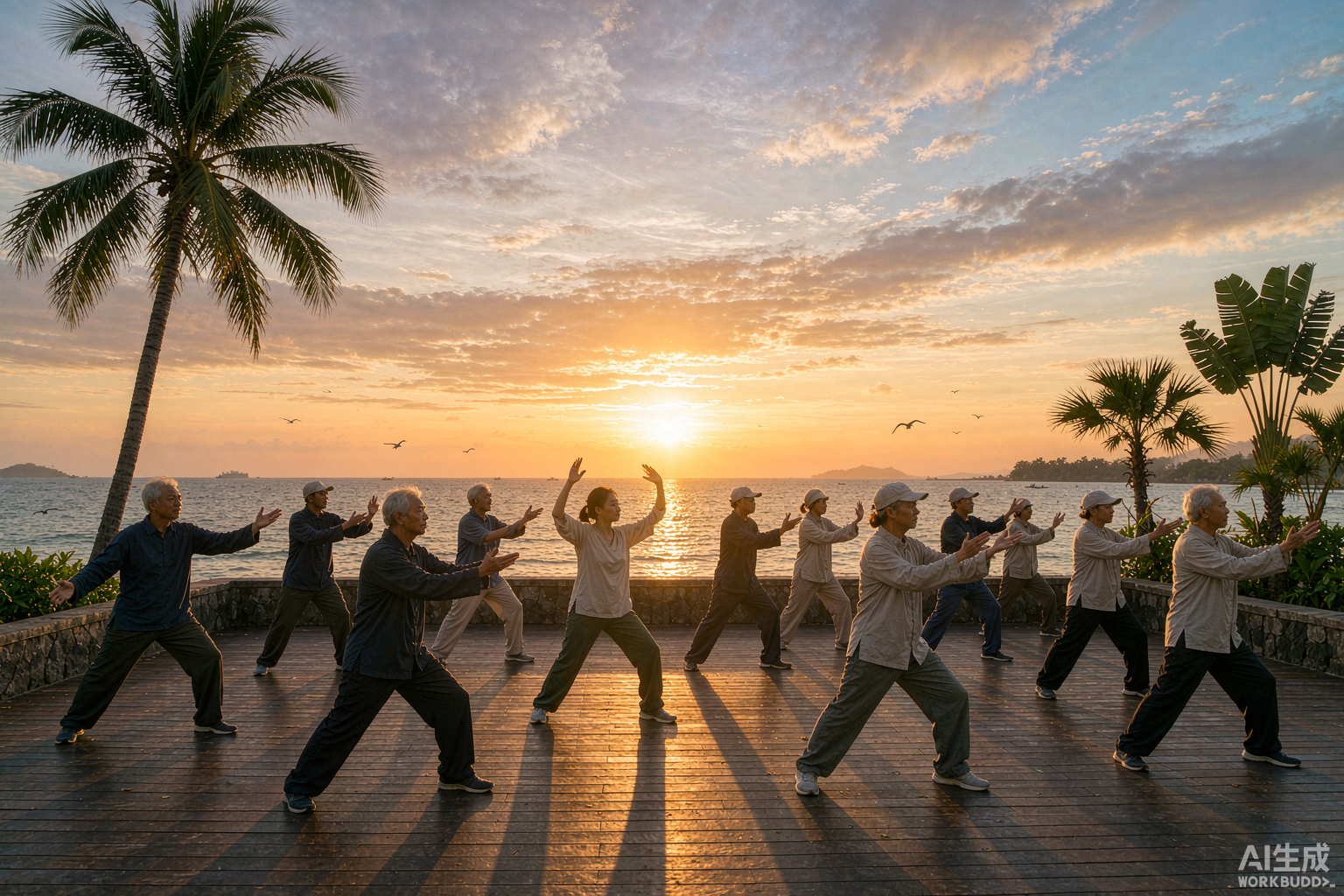
1. Tai chi: the best-studied traditional exercise
Tai chi is a slow, flowing mind-body exercise and the most clinically studied of the traditional movement arts. Relatively well-supported areas:
Its strengths are low intensity, no equipment and lifelong practice; the caveat is that poor form can load the knees, so guided learning matters.
- Balance and fall prevention in older adults
- Pain and function in knee osteoarthritis
- Adjunct rehab in chronic heart failure and COPD
- Supportive improvement of sleep and mood
2. How long to learn a form
The common entry path for international patients: the 24-form simplified tai chi set. Five to ten days of concentrated teaching is enough to follow through, then 30 daily minutes to consolidate.
Wellness hotels in Sanya, Haikou and Hangzhou run short tai chi courses with English-speaking instructors, often co-organised with TCM hospitals — many visitors come to “learn the form” rather than for treatment.
3. Wellness packages: check-up + conditioning + holiday
Wellness programmes bundle medical assessment, lifestyle intervention and a resort setting. A typical week:
These programmes fit sub-health states, chronic-disease management and recovery phases; acute illness still belongs in a hospital.
- Day 1: full physical plus TCM constitution assessment
- Days 2–5: morning tai chi / baduanjin, acupuncture or tuina sessions, dietary guidance
- Interleaved seaside or mountain recovery outings
- Final day: key markers rechecked, English summary report issued
4. Baduanjin and lighter options
If tai chi feels demanding, baduanjin (“eight pieces of brocade”) is easier: eight moves, about fifteen minutes per set, and many rehabilitation departments write it into discharge guidance.
Our “Treatment process” column covers pre- and post-operative activity advice; have a check-up before starting any new practice programme.
5. Fitting wellness into the trip
Hainan holds China's densest wellness resources: year-round outdoor weather, licensed-therapy access in the Boao Lecheng pilot zone, and high wellness-facility density in Sanya and Haikou.
On visas: travellers from 59 countries can use Hainan's visa-free entry, and the 240-hour transit visa-free policy also covers Hainan — see our long read “What the 240-hour transit visa-free policy means for patients”.
Представительские больницы
Boao Super Hospital
Хайнань
Inside the Boao Lecheng pilot zone; pairs with wellness resorts for “licensed therapy + holiday” programmes
Открыть профиль больницыHainan Provincial People's Hospital
Хайнань
Hainan's leading hospital — a solid base for pre-trip check-ups and chronic-disease assessment
Открыть профиль больницыЧитайте также