Acupuncture
Fine needles at defined points, delivered under reproducible clinical protocols
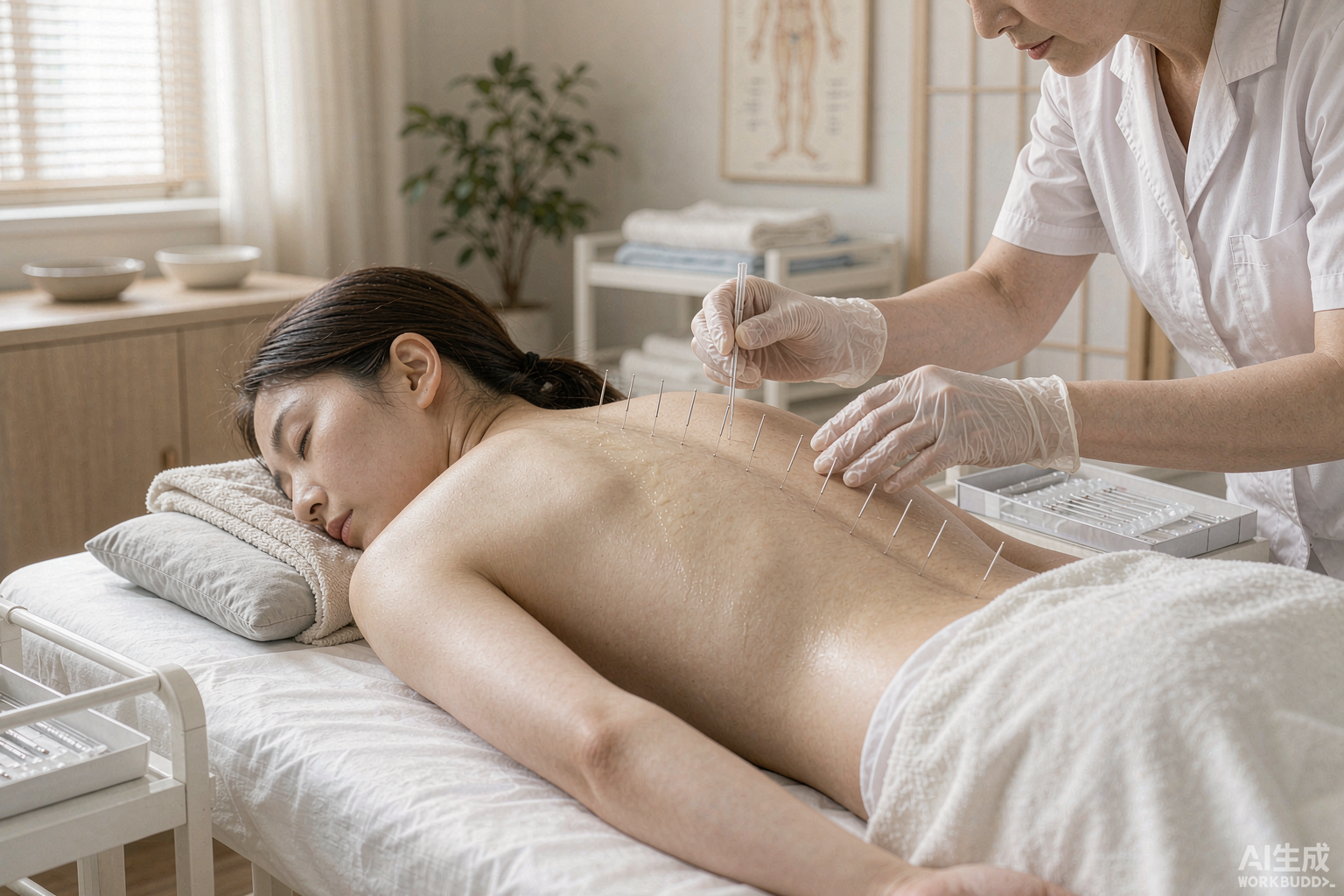
1. What acupuncture is
Acupuncture inserts very fine needles at defined points to modulate function through manipulation, electrical stimulation or heat. Modern clinical needles are 0.16–0.30 mm in diameter — far thinner than injection needles — and most patients feel only a mild ache or distension at insertion, known in Chinese medicine as “de qi”.
In China acupuncture is a medical service, not a wellness experience: it is performed by licensed physicians in treatment rooms, with single-use needles and auditable protocols.
2. What it is commonly used for
Acupuncture is most widely applied to pain and functional conditions. WHO's acupuncture trial evidence list includes, among others:
Evidence strength varies by condition; acupuncture usually works alongside standard care rather than replacing it.
- Neck, shoulder, back and sciatic pain
- Migraine and tension-type headache
- Post-chemotherapy and post-operative nausea
- Primary dysmenorrhea
- Bell's palsy rehabilitation support
- Insomnia and functional GI discomfort
3. What a session looks like
The first visit takes 40–60 minutes, follow-ups 20–40 minutes. The typical flow:
Needles stay in for 10–25 minutes; some hospitals add electro-acupuncture, moxa boxes or cupping. Most protocols run 2–3 sessions per week, with 5–10 sessions as one evaluation cycle.
- Consultation with tongue and pulse reading to define the point prescription
- Disinfection and insertion; a brief ache means the point is engaged
- Rest quietly during retention; signal any discomfort
- Needles removed with pressure applied; aftercare explained
4. Safety and contraindications
In licensed settings serious adverse events are rare. The most common minor reactions are brief soreness or a drop of blood at insertion; dizziness (needle fainting) is usually linked to fasting or anxiety and resolves lying down.
Tell the physician beforehand if you:
- Take anticoagulants or have a bleeding tendency
- Are pregnant (some points are forbidden)
- Have a pacemaker (electro-acupuncture needs caution)
- Have local skin infection or broken skin
5. Cost and language
At Grade 3A hospitals a single acupuncture session typically costs a few tens to a few hundred RMB; international departments charge more but include interpretation. A 5–10 session course usually costs far less than comparable services in Europe or North America.
International departments in major cities offer English intake; see our long read “Do doctors speak English?” for how to verify.
Representative hospitals
Guangdong Provincial Hospital of Chinese Medicine
Guangzhou
One of the largest TCM hospitals worldwide, with a day-treatment acupuncture unit and mature international patient services
View hospital profileLonghua Hospital
Shanghai
Shanghai TCM university hospital integrating acupuncture with neurology for facial palsy and stroke rehabilitation
View hospital profileRelated reading